
Youth, Art, and Memory – Digital Culture in Action

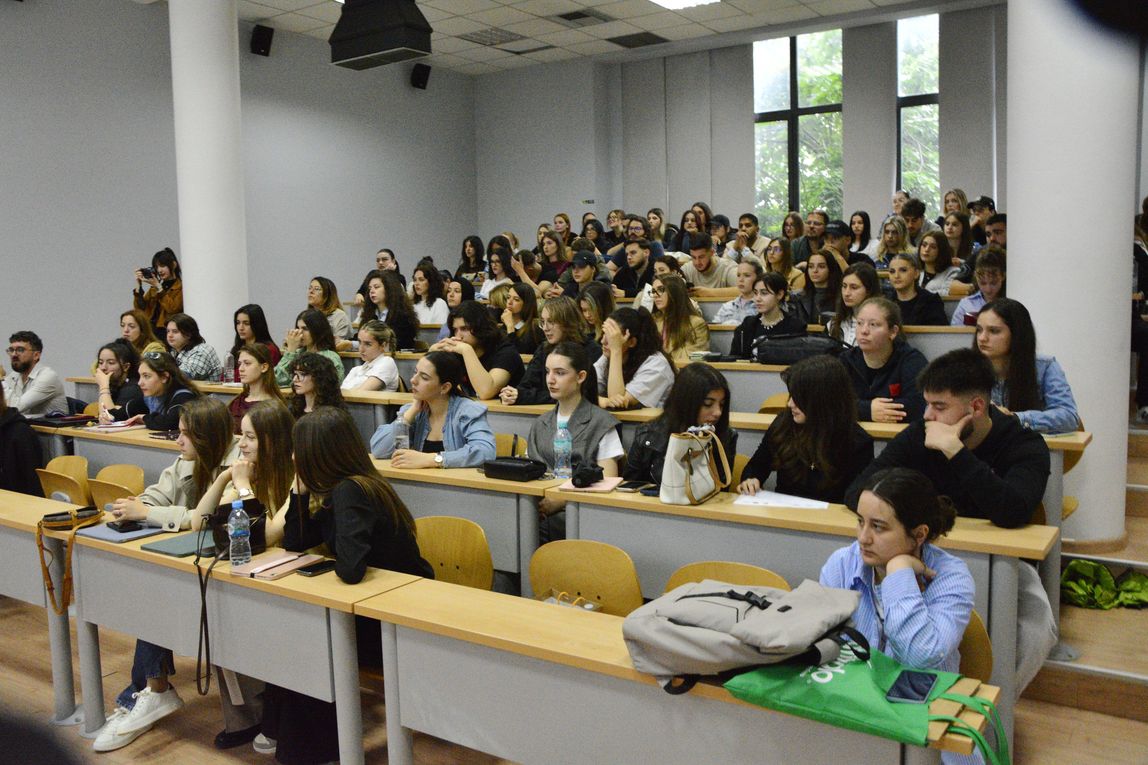
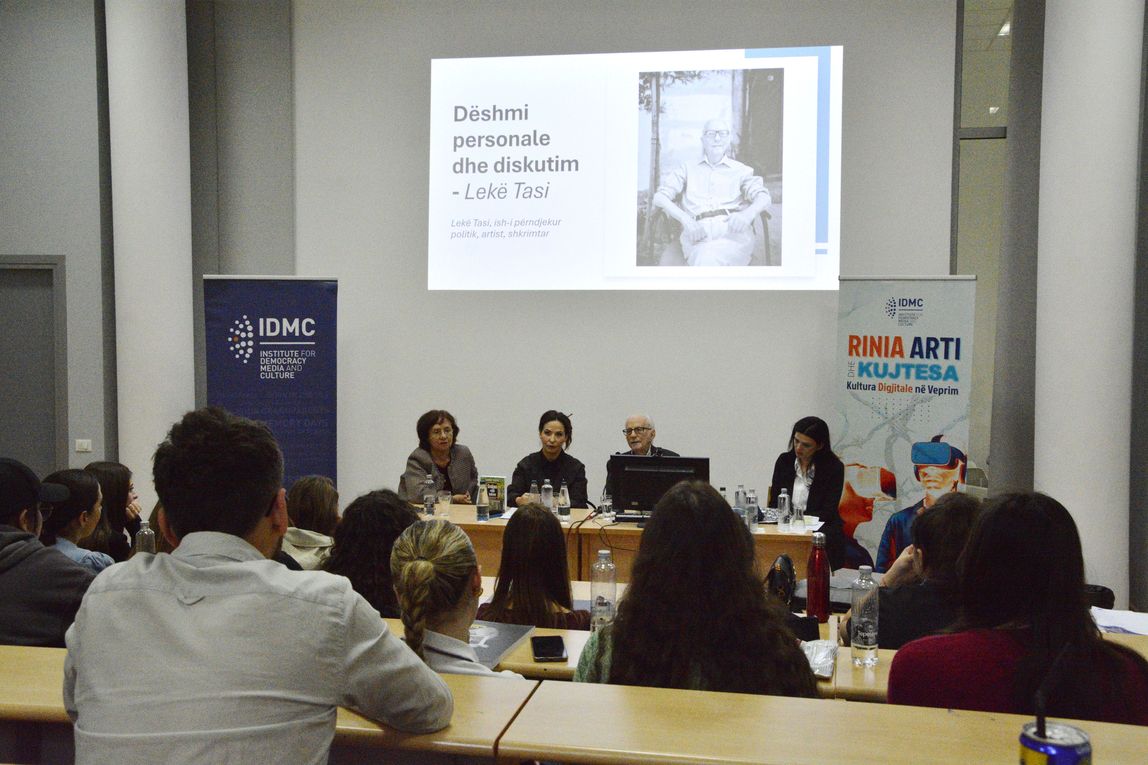
In collaboration with POLIS University and with the support of the Ministry of Economy, Culture, and Innovation, the Institute for Democracy, Media, and Culture (IDMC) organized the first two-day workshop as part of the "Youth, Art, and Memory – Digital Culture in Action" project. The project aims to empower young artists by integrating art, history, and technology, as a contemporary way to preserve and promote historical memory.
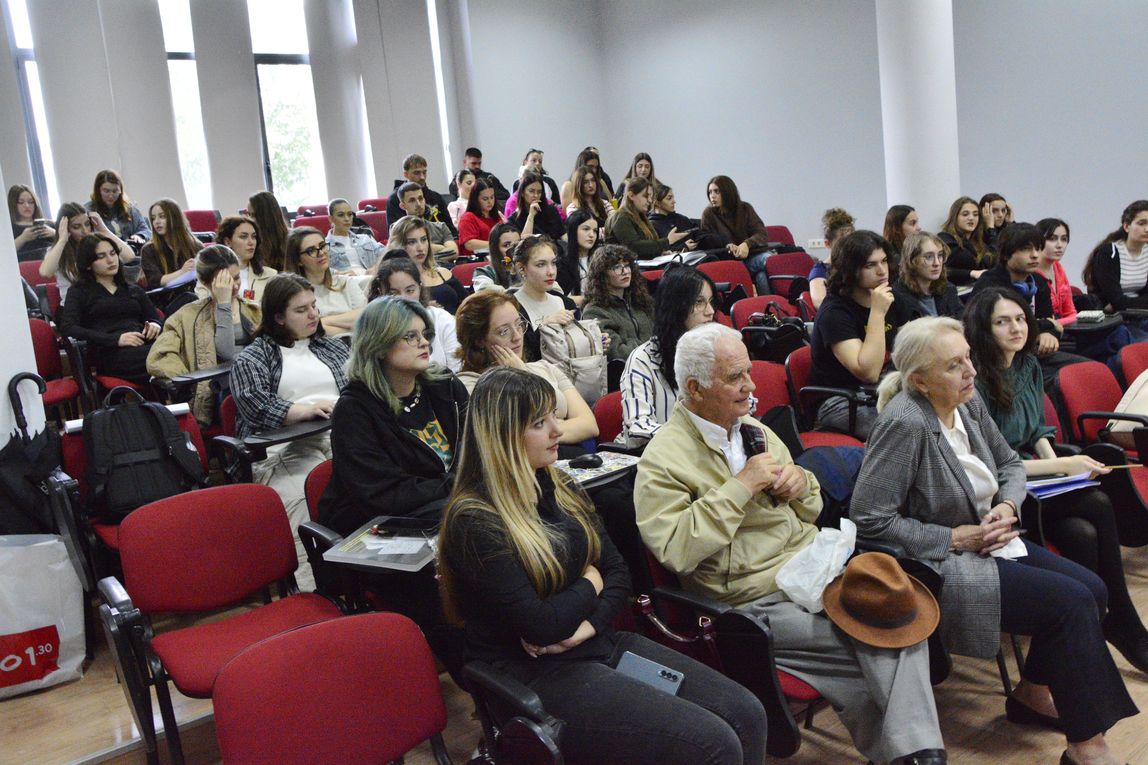
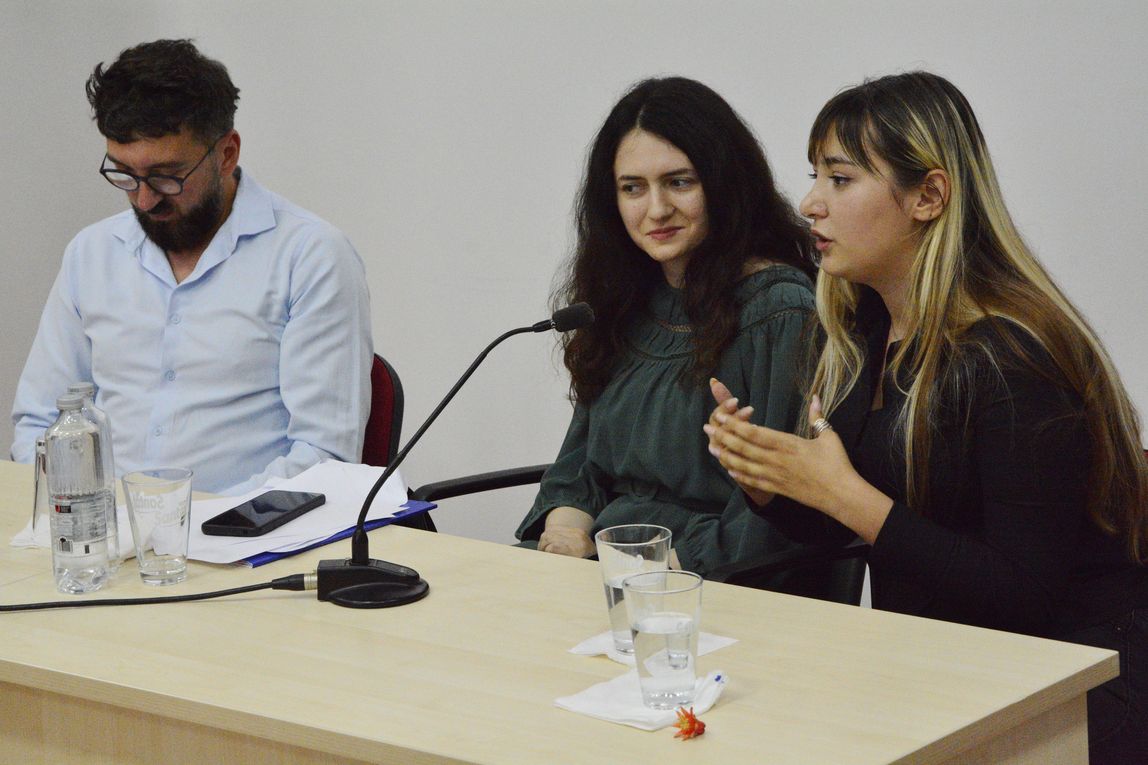
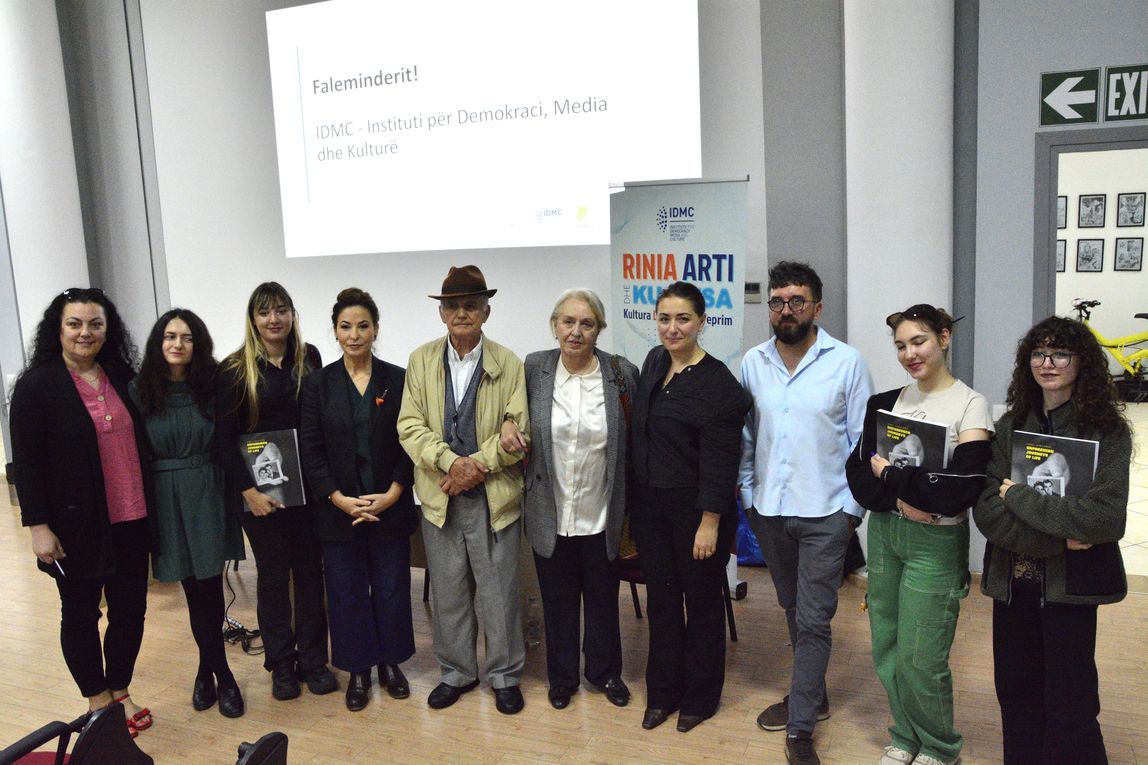
Art and design students heard firsthand accounts from former political prisoners from the communist era, which shed light on the human experiences of suffering, resistance, and the loss of freedom. Lekë Tasi, Alma Liço Mirakaj, Vera Bekteshi, and Gjetë Kadeli shared their experiences of imprisonment, forced relocation, and persecution, prompting a profound reflection on the recent history of the country.
Lekë Tasi recounted a harrowing story of a family severely impacted by the communist regime. His father, uncle, brother, and sister were imprisoned, while he himself, a renowned musician, lost his job and was forced to live in an internment camp for 15 years in Grabjan. His story, documented in the book "Grabjani rrëzë kodrave" ("Grabjan by the Hills"), is filled with both pain and resilience.
Alma Liço Mirakaj described her own experience of being interned at a young age, after her grandfather was executed in 1945. She lived in extremely difficult conditions in a makeshift camp, and despite her excellent academic performance, she was expelled due to her family's history. After 23 years of imprisonment, she was released in 1991. She has since written several books, including "Krahë të këputur" ("Broken Wings") and "Ëndërroj" ("Dreaming").
Vera Bekteshi, a physicist and pedagogue, was sentenced after her father was arrested during the "Iron Purge" uprising. After being left orphaned and unemployed, she was interned for 16 years in Berat. She experienced isolation and poverty, but after the fall of the regime, she was able to complete her doctorate and became a powerful voice through her writing. Her works, such as "Vila me dy porta" ("The Two-Gated Villa") and "Ora me rërë" ("The Sandglass"), reflect her experiences.
Gjetë Kadeli was interned as a child in a camp in Tepelena. She was arrested several times, and in Spaç, she participated in the 1973 revolt, raising the colorless flag. She was subsequently arrested and spent almost 16 years in prison. Even after her release, she remained under surveillance until the collapse of the regime. Today, she is one of the most active witnesses of the crimes committed during the communist era in Albania.
On the second day, the focus shifted from historical accounts to artistic creation. Students explored different ways of expressing the stories they had heard through digital media. They were presented with materials from the Memory Observatory and the documentary "Flamuri – Revolta e Spaçit" (The Flag – Spaç Revolt). Furthermore, digital art resources from IDMC demonstrated how memory can be preserved and transmitted through technology. Students received practical guidance from experts Dr. Remjon Pronja and Iris Boshnjaku, preparing them for the creative phase. The workshop was facilitated by Jonila Godole, Sonia Jojiç, Brisejda Lala, and Oriada Dajko, creating a space for reflection, dialogue, and inspiration.
The next activity will be a study visit to the Museum of History, where students will have the opportunity to experience another dimension of historical memory firsthand before embarking on their artistic creations.