
Memory Days '26

The Institute for Democracy, Media, and Culture (IDMC) and the Konrad Adenauer Foundation (KAS) are pleased to present the 11th edition of MEMORY DAYS, which will take place from February 19–21 in Tirana, Albania.
For more than a decade, the MEMORY DAYS have evolved into a dynamic platform that brings together leading organizations and institutions working in the field of memory — including museums, local and international memory initiatives, associations of former political prisoners and persecuted individuals, research centers, civil society organizations, as well as policymakers, scholars, media professionals, artists, and young people.
With many participants from Albania, the region, and beyond come together to exchange their experiences, achievements, and challenges in promoting and preserving the memory of the consequences of the communist dictatorship in Albania.


On February 20, 1991, the fall of Enver Hoxha’s statue marked a pivotal moment in Albania’s history – a symbolic act that signaled a break from the past and the beginning of a new chapter in civic and political life.
35 years later, MEMORY DAYS 2026 revisits that moment to reflect on its meaning and legacy. What does it mean to bring down a symbol, and what comes next? In an era when many societies are reexamining their authoritarian pasts and the contested symbols that remain in public spaces, MEMORY DAYS provides a platform for open dialogue, critical reflection, and cultural engagement.
Now in its second decade, MEMORY DAYS brings together museums, civil society organizations, scholars, artists, students, media professionals, policy-makers, and former political prisoners from Albania, the region, and beyond. Together, we explore how remembrance, education, and democratic values shape our shared future.
This year’s program includes:
- February 19, Evening – Artistic Performance
“How to Pull Down a Statue”
A multidisciplinary performance by young drama students from the Faculty of Arts, exploring the symbolic, emotional, and civic dimensions of tearing down a monument in a society coming to terms with its past. - February 20, Morning – Roundtable Discussion
“Falling Symbols – Experiences of Transformation”
An international dialogue featuring voices from Albania, Hungary, Poland, Germany, and Romania on how societies confront and transform their historical narratives. - February 20, Evening – Film Screening
“Goodbye Lenin”
A powerful cinematic reflection on the lingering presence of dictatorship-era symbols, habits, and mindsets in post-communist life. - February 21, Morning – Online Lab
“Roots & Reels” – International History Competition for Young Digital Storytellers
An interactive platform for young creators to share stories from the past that resonate with today’s world.
In continuation of our tradition of collaboration, as in previous editions, we invite all organizations and institutions working in the field of memory — both public and non-public — including museums, local and international memory initiatives, associations of former political prisoners and persecuted individuals, research centers, and others, to become part of this edition.
Thank you!
The IDMC Team
Summary
1st Day, 19 February: Artistic Performance “How to Pull Down a Statue”
On February 19, 2026, the Institute for Democracy, Media & Culture (IDMC), in partnership with the Konrad Adenauer Foundation in Albania, opened the 11th edition of the Memory Days in Tirana—marking 11 years of commitment to confronting the past and preserving historical memory in Albania.
This edition began with the artistic performance “How to Pull Down a Statue”, featuring excerpts from the novel of the same title, written by Jonila Godole. The performance was based on the historic date of February 20, 1991, and was composed as a multi-voiced piece of testimony, combining testimonies, archival fragments, and monologues.


A factory worker holding a rope, a stenographer who recorded the language of power, a former political prisoner seeking justice, a child who witnessed the event from a window, a woman who changed her name to survive, a memory expert who reframe dictatorship to serve her own narrative.
Even the statue speaks. Not with remorse, but with a warning: “I do not fall, I rise again.” Together they form a resonant chorus of memory. The performance ends where the myth begins. A call to witness and a refusal to forget. As the statue rises once again on stage, the same questions remain: Who decides what is remembered? And what truly falls, when a statue falls?
Directed by Flobensa Bezati and performed by actors: Redjan Mulla, Endriu Hysi, Klajdi Malellari, Shandi Ismailaj, Kristo Qerama, Artemis Beluli, Erina Lazi and Euro Rrasa, the performance had an extraordinary success and impact on the audience, prompting participants to address questions to the author and turning the moment into a space for reflection on what happened in Albania on February 20, 1991.


A warm thank you to Raiffeisen Bank who made possible the performance, and all collaborators and supporters who have been part of this journey over the past decade and remains committed to continuing its efforts to preserve historical memory and promote human rights.
2nd Day, 20 February: Roundtable Discussion: “Falling Symbols – Experiences of Transformation”
On February 20, 2026, as part of the 11th edition of the Memory Days in Tirana, the Institute for Democracy, Media & Culture (IDMC), in cooperation with the Konrad Adenauer Foundation in Albania, organized the international roundtable discussion titled “Falling Symbols – Experiences of Transformation.” The event took place at the Tirana International Hotel and brought together historians, researchers, publishers, and institutional representatives from Central and Eastern European countries that have undergone similar processes of transition following the fall of communist regimes.
The event opened with welcoming remarks by Jonila Godole, Director of IDMC; Thomas Kunze, Director of the Konrad Adenauer Foundation in Tirana; Agron Gjekmarkaj, Deputy Speaker of the Parliament of Albania; and Wojciech Unolt, Chargé d’Affaires of the Embassy of Poland in Albania. In their remarks, the speakers emphasized the importance of preserving historical memory and critically reflecting on the past as essential elements for strengthening democratic institutions and fostering a culture of remembrance in post-totalitarian societies.
Panelists and Key Reflections from the Discussion:
- Christoph Links, publisher and publicist from Germany, shared insights from the German experience of confronting the legacy of the former East German dictatorship. He emphasized that the opening of archives, the documentation of the past, and the publication of critical literature have played a crucial role in building a sustainable culture of remembrance and in informing younger generations about the history of the regime.
- Afrim Krasniqi, historian and head of the Institute of History at the Academy of Sciences of Albania, reflected on the challenges Albania continues to face in dealing with its communist past. He underlined the importance of academic research and the study of historical documents in building a more comprehensive and balanced understanding of the dictatorship period.
- Thomas Kunze, historian and biographer of Nicolae Ceaușescu, offered a comparative perspective on how countries in Central and Eastern Europe have addressed the figures and symbols of communist regimes after 1989. He noted that processes of democratic transformation are often accompanied by intense debates about historical memory and the interpretation of the past.
- Jan Skórzyński, historian and publicist from Poland, spoke about the Polish experience of democratic transition and the role that public debate has played in shaping narratives of memory. He pointed out that confronting the past is not a completed process, but an ongoing dialogue between history, politics, and society.
- Áron Máthé, Deputy Chair of the Committee of National Remembrance in Hungary, highlighted the role of memory institutions in documenting the crimes of totalitarian regimes and in educating younger generations about the history of dictatorship and its consequences for society.
Moderator:
- Norbert Beckmann-Dierkes, Director of the Konrad Adenauer Foundation in Bulgaria, moderated the discussion and guided the debate toward a broader reflection on the symbolism of the removal of monuments associated with dictatorship and on how post-communist societies attempt to understand and process the legacy of their past.
Panelists shared experiences from their respective countries regarding the processes of political and social transformation, the role of memory institutions, and the ways in which the symbolic removal of monuments and figures associated with dictatorship has been interpreted and processed within public discourse. The discussion highlighted that, although the fall of such symbols marked an important historical turning point, the process of democratic transformation and coming to terms with the past remains an ongoing challenge for many societies in the region.
Following the discussion, the audience had the opportunity to engage with questions and comments, turning the session into an open and reflective dialogue on historical memory, democratic transition, and the role of institutions in shaping narratives of the past. The event concluded with a reception and networking session, creating opportunities for further exchanges among scholars, institutional representatives, and participants.
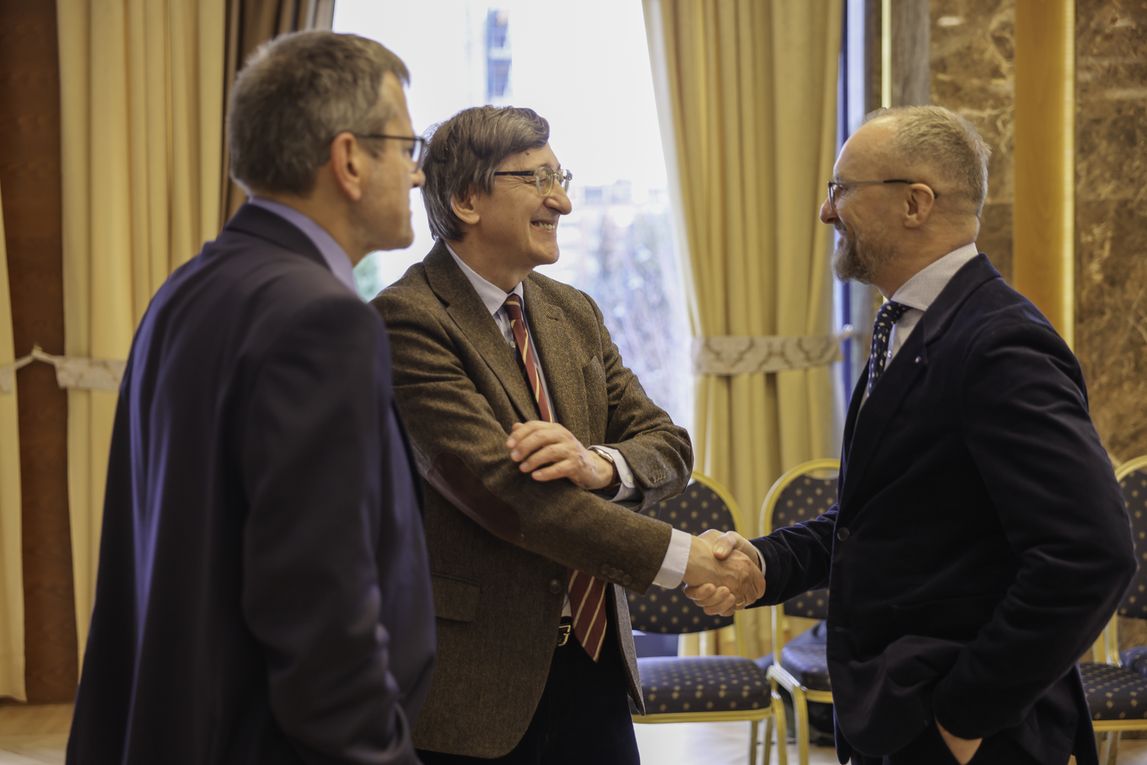
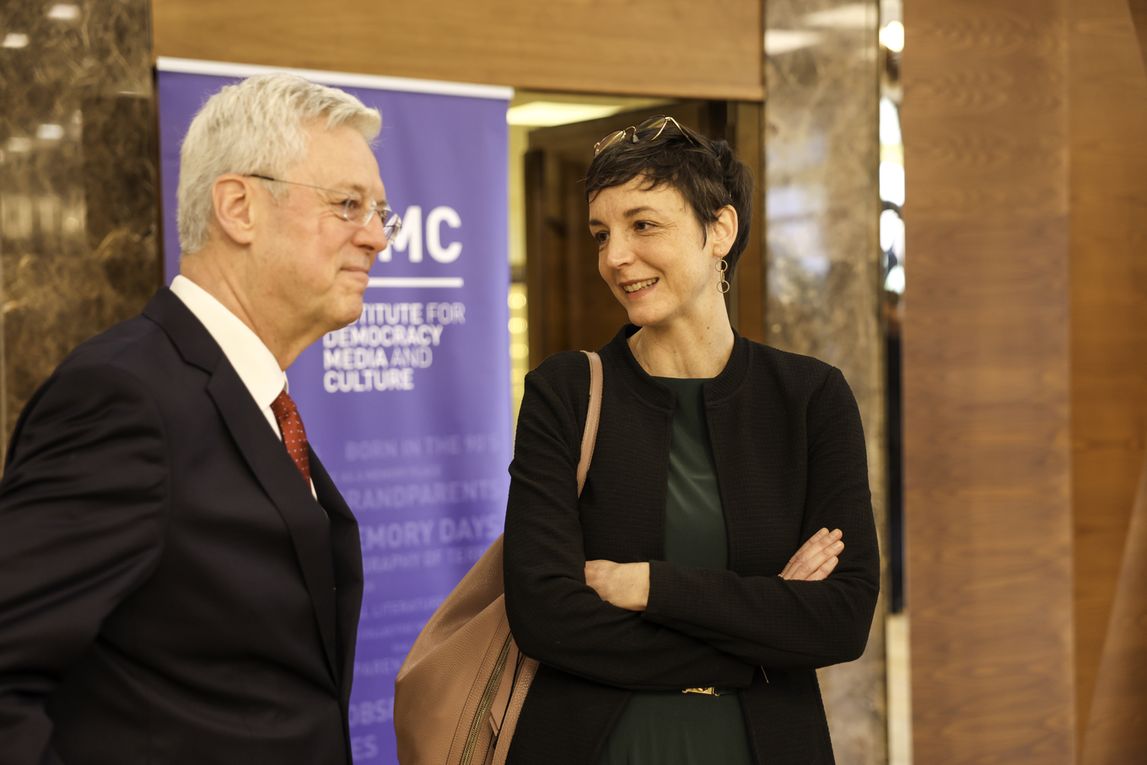


In a broader perspective, the roundtable created an important space for reflection on the symbolism of the removal of monuments associated with dictatorships across Central and Eastern Europe and on how these historical moments have been processed within collective memory. For Albania, February 20, 1991, which marks the fall of the statue of Enver Hoxha in Tirana, remains a powerful symbolic moment of separation from the country’s totalitarian past. However, the discussion among panelists highlighted that the fall of symbols does not always correspond to an immediate break with the structures, mentalities, and legacies of previous systems.
By comparing experiences from countries such as Poland, Hungary, Germany, and Romania, the event contributed to a deeper understanding of the processes of democratic transition and the shared challenges that post-communist societies continue to face in building a democratic culture and a critical approach to historical memory.
2nd Day, 20 February: Film Screening “Goodbye Lenin”
As part of the 11th edition of the Memory Days in Tirana, the audience had the opportunity to attend the screening of the film “Goodbye Lenin,” a satirical yet deeply emotional story about post-socialist memory, “Goodbye Lenin” explores life after dictatorship and the ways in which symbols, habits, and everyday routines of a former system can continue to linger. The film raises a question that remains relevant today: the past does not simply disappear—it transforms, and understanding it is essential if societies are to truly confront it.
Directed by Wolfgang Becker, the film was screened on the evening of February 20 at Agimi Art Center, bringing together a diverse audience of local and international guests. Among those present was the German Ambassador Karl Bergner, who in his welcoming remarks shared reflections on the experience of life after dictatorship in Germany.
He also praised the efforts of the Institute for Democracy, Media and Culture over the past decade in raising awareness about Albania’s dictatorial past and acknowledged the institute’s contribution to fostering public reflection on historical memory. Ambassador Bergner expressed his appreciation for these initiatives and his openness to further cooperation in the future.


The screening offered not only a cinematic experience, but also an opportunity for reflection on how societies remember, reinterpret, and come to terms with their past—an essential theme at the heart of the Memory Days.
A warm thank you to the German Embassy and Goethe Zentrum, for the support of the screening of the movie.
3rd Day, 21 February: Roots & Reels – International History Competition
As part of the Days of Remembrance in Tirana, an online session titled “Roots & Reels: Telling the Past through Digital Storytelling” was held on February 21, 2026. The session was organized by the Institute for Democracy, Media & Culture (IDMC) within the framework of the international history competition "Roots & Reels", part of the European EUSTORY network.
The online session brought together young creatives from different countries to explore how history can be reinterpreted and narrated through digital media and short film formats. Through discussions and the exchange of ideas, participants developed creative concepts and received feedback on how historical sources can be transformed into visual stories that connect the past with the present.
At the heart of the session was the guiding question: “What stories from the past speak to you today?”—an invitation to reflect on how personal and collective memories can be explored and communicated through new forms of storytelling.


The discussion was moderated by Valbona Bezati, Roots & Reels coordinator at Avans University, who guided participants through conversations about the importance of historical sources, creative storytelling, and the role of digital media in making history relevant for contemporary audiences.
The session encouraged thoughtful engagement with history and memory, fostering cross-cultural dialogue and promoting innovative ways of connecting past and present through digital storytelling.