
“Communism in Its Time,” an exhibition marking the 27th anniversary of the fall of dictator Hoxha’s statue
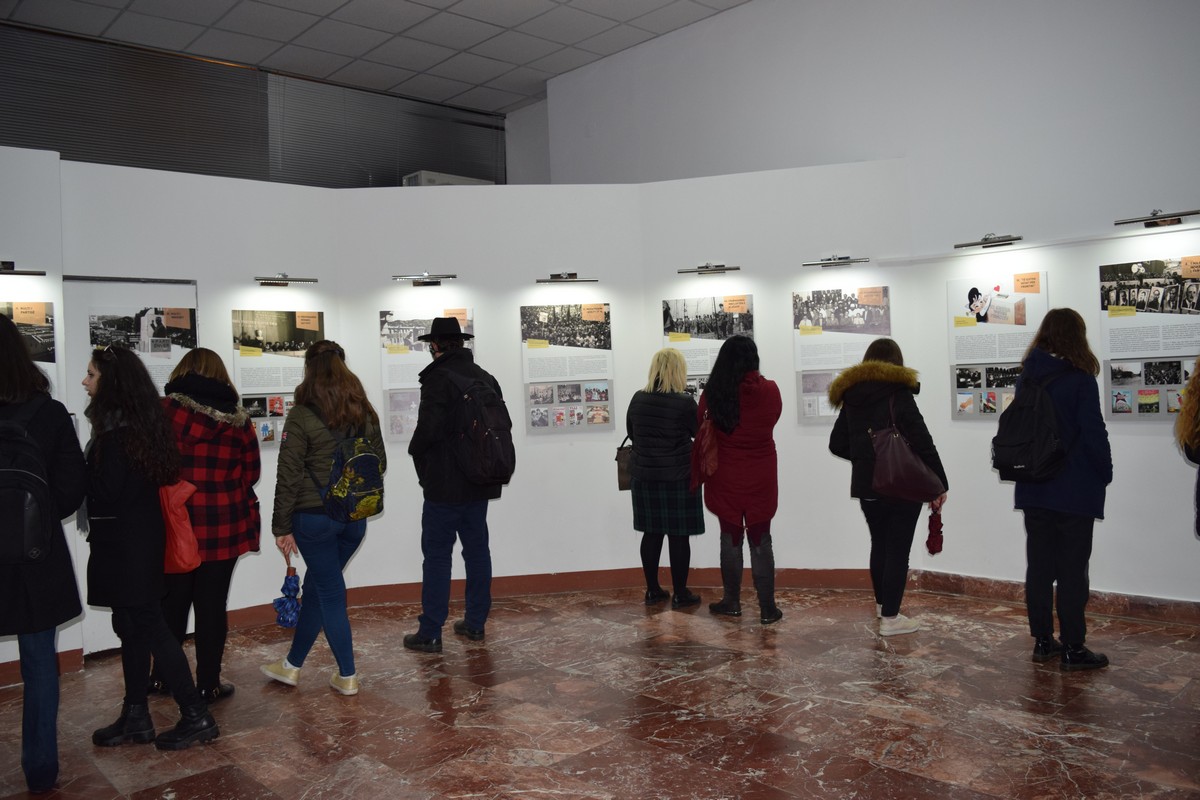
The Institute for Democracy, Media & Culture (IDMC) is presenting the exhibition "Communism in its Time" in Tirana on the 27th anniversary of the collapse of Enver Hoxha's regime, marking a symbolic moment for the end of dictatorship in Albania. This traveling exhibition, prepared by the Federal Foundation for the Study of Dictatorships in East Germany, has been presented in English, French, Spanish, Russian, Ukrainian, Armenian, Estonian, Georgian, Romanian, and Czech in various countries around the world, and is being shown for the first time in Albanian, in collaboration with IDMC.
The rise and fall of communism in the 20th century, as reflected in this exhibition, aims to help us understand that the experiences that Albania and other countries in the communist bloc went through were not so different. The rise and fall of communism in the 20th century involved an ideology that, through the cult of the individual and brutal repression, led to the deaths of over 100 million people, including Albanians.
In her opening remarks, IDMC Director Dr. Jonila Godole stated:
"The foundation of democracy, the establishment of the rule of law, is still incomplete in Albania. This should remind us to look back and see what similarities there are with the present situation."
Invited to speak at the exhibition was Dr. Dorian Koçi, Director of the Historical Museum, who stated that such exhibitions help young people learn about the past. The exhibition was presented by its curator, Dr. Ulrich Maehlert, who shared with the audience the enthusiasm with which the Federal Foundation for the Study of Dictatorships in East Germany had anticipated the IDMC's proposal to bring the exhibition to Albania.
Dr. Maehlert stated that an analysis of communism is necessary to achieve justice for its victims.
"The fates of many families, the trauma experienced by many people today, all have their roots in the past."


The main speech at the event was given by Fatos Lubonja, a former political prisoner, who brought to everyone's attention the situation in Albania, arguing that Albania remained "Stalinist" for a long time.
"At the heart of Stalinism is the maximum terror of the regime."
The presentation of this exhibition by IDMC in February is no accident, as it coincides with a period of collective remembrance in Albania. On February 19, 1951, a "bomb" was staged at the Soviet embassy, which justified the arrest and subsequent execution of 22 people. Also in February 1967, Enver Hoxha initiated what he called a "struggle against religious prejudices and customs", as a result of which 2,200 places of worship were closed or confiscated. With this campaign against religion, the Hoxha regime declared "the function of the clergy liquid" and persecuted and imprisoned the majority of them. Albania became the only atheist country in the world. And just this month will mark another important date, the symbolic overthrow of the regime. On February 20, 1991, students and citizens of Tirana broke the fear and overturned Enver Hoxha's statue. This popular gesture finally broke the silence about state repression and accelerated the change of the system.
The exhibition "Communism in its Time" offers the opportunity to learn about the development and spread of communism worldwide, and aims to stimulate reflection and dialogue about Albania's past. It opened on February 19 at the National Historical Museum and will remain open until the beginning of March. Admission is free.